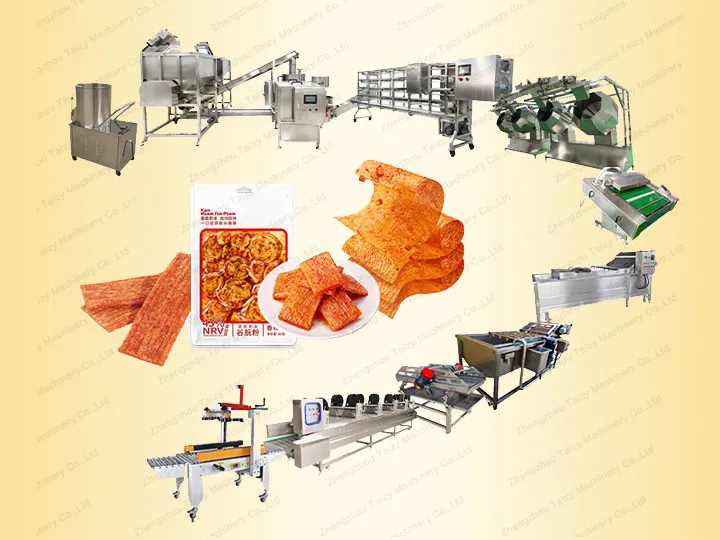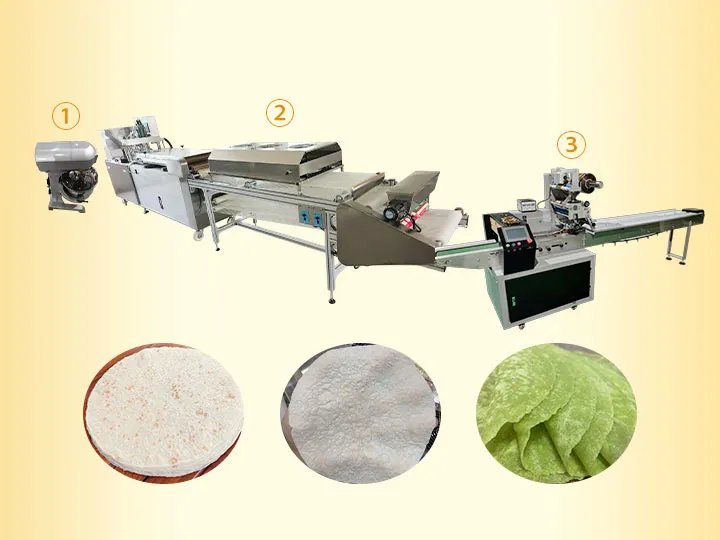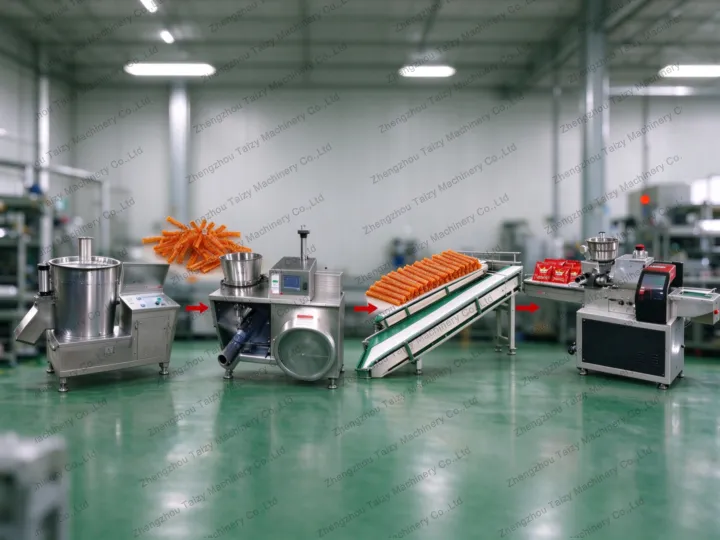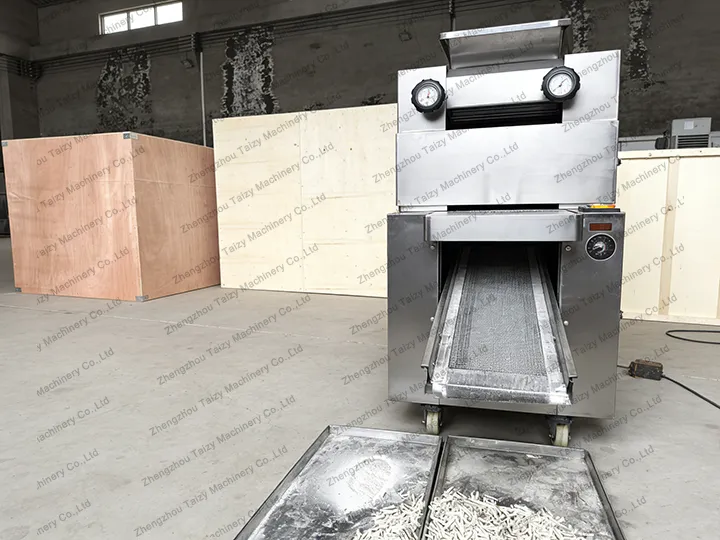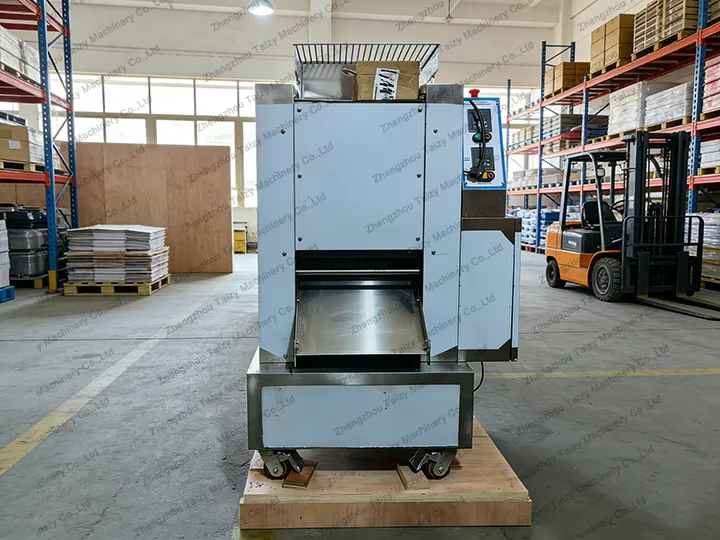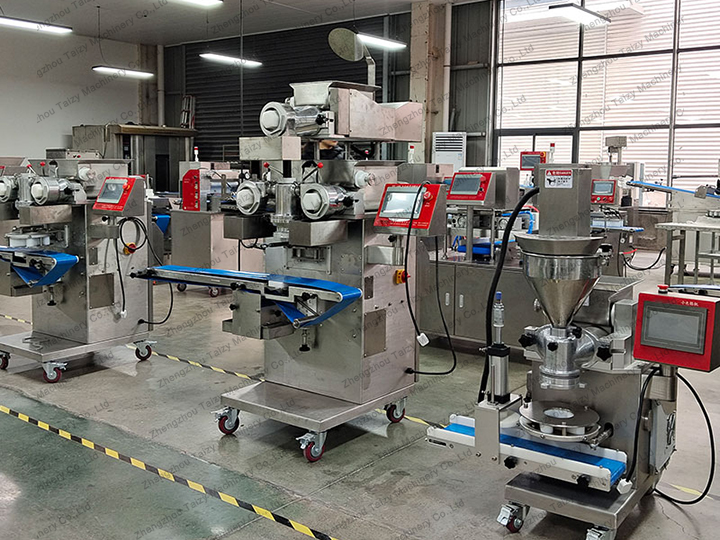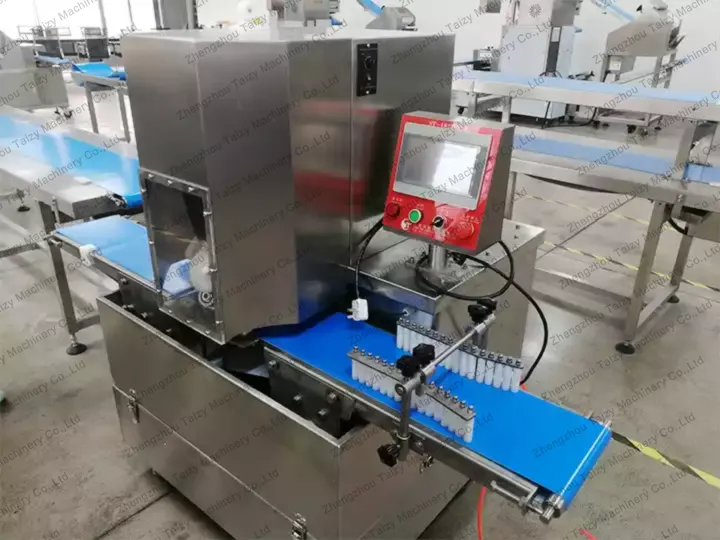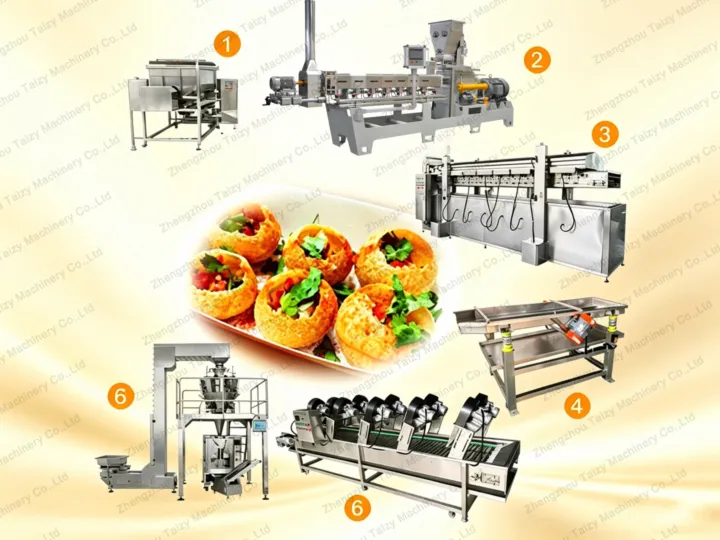
Our panipuri making machine delivers a complete 6-process production line that turns out consistent, hollow, crispy puri shells at 50 to 800 kg/h — the format Indian street vendors and snack factories know as pani puri, golgappa, or puchka. The line pairs a 304 stainless steel dough mixing machine with our horizontal panipuri forming machine (three large-capacity models plus a compact small-capacity unit), then feeds the formed shells through a continuous frying machine, a vibrating de-oiling machine, a turning air-drying tunnel, and finally a packaging machine for retail-ready pouches.
Whether you are a roadside chaat stall in Mumbai upgrading from hand-rolled puris, a mid-size factory in Delhi serving NCR snack brands, or a commercial producer in Kolkata supplying puchka shells to East Indian markets, this line scales with you. Don’t hesitate to contact us for more details.
Puchka Production Line Working Video
What Is Panipuri? The Indian Crispy Hollow Shell
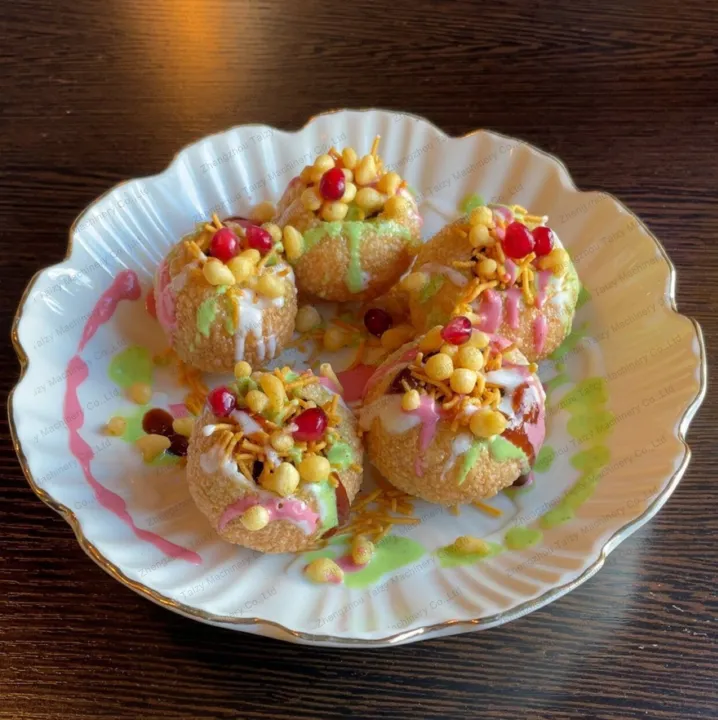
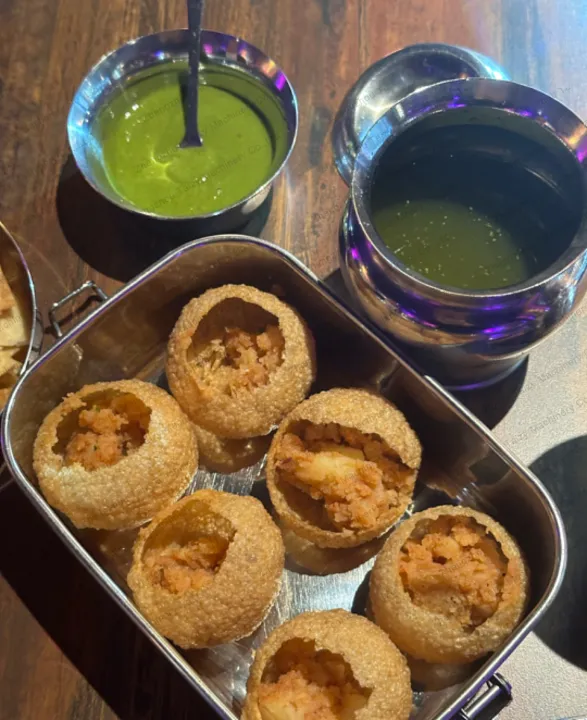
Panipuri is a round, hollow, crispy fried shell that is the foundation of one of India’s most loved street foods. The shell is poked open and filled with spiced water ( pani), mashed potato, chickpeas, onions, and chutneys — then eaten in one bite. It is sold by the plate on virtually every Indian street corner.
Because India is multilingual, the same product is searched under several names. To capture the full demand for your finished snack, you need to understand the regional vocabulary your customers use:
| Name | Region / Language | Search Volume Signal |
|---|---|---|
| Panipuri / Pani Puri | Standard Hindi, widely used across India | Highest — default search term |
| Golgappa | Punjab, Delhi NCR, Haryana, UP | Very high in North India |
| Puchka | West Bengal, Bihar, Jharkhand, East India | High in East India and Bangladesh |
| Phuchka / Phulki | Parts of Bihar, Jharkhand, Nepal border | Moderate |
| Gup Chup | Odisha | Regional / niche |
panipuri making machine search habits across different regions
Complete Panipuri Production Line Workflow
Our standard panipuri production line combines six machines into a continuous workflow. Each machine can also be purchased and used as a stand-alone unit if you already own part of the process.
Workflow: Dough Mixing → Panipuri Forming (Skin Making) → Continuous Frying → Vibrating De-oiling → Turning Air Drying → Automatic Packaging
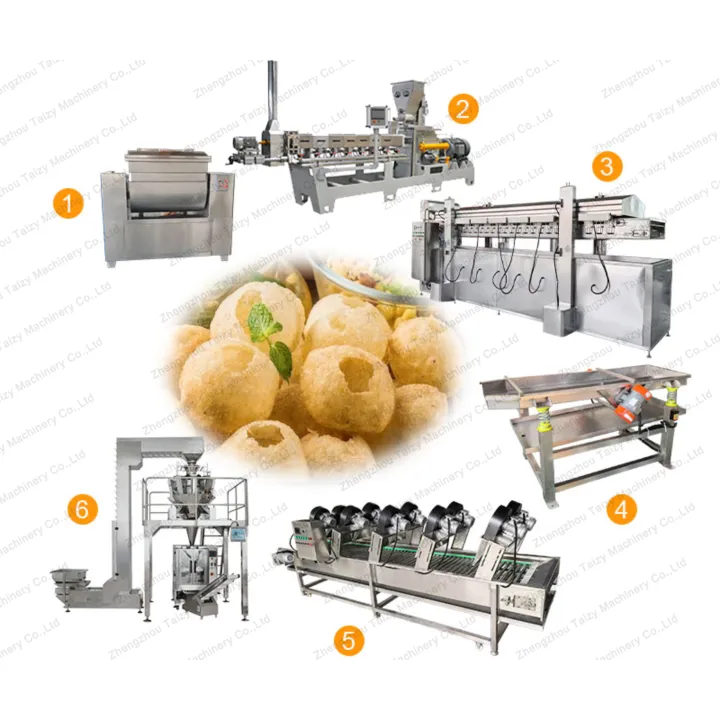
1. Dough Mixing Machine
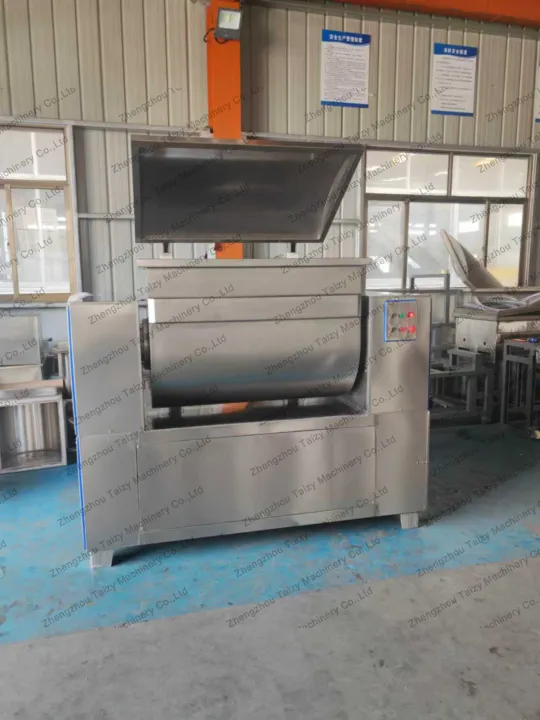
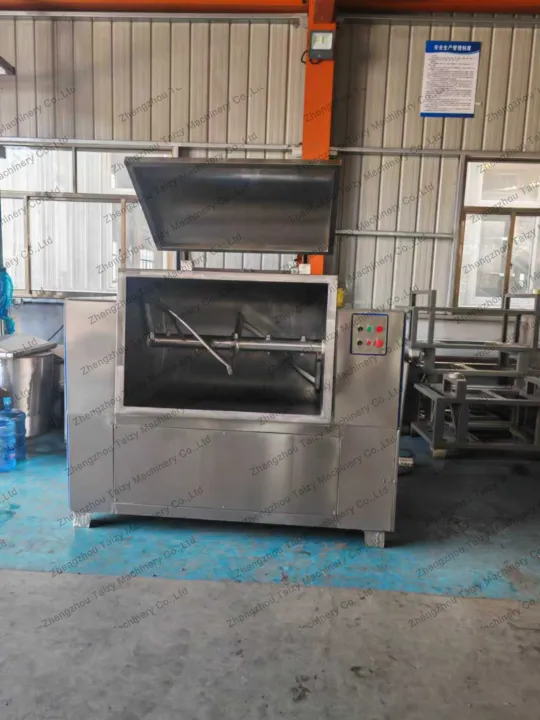
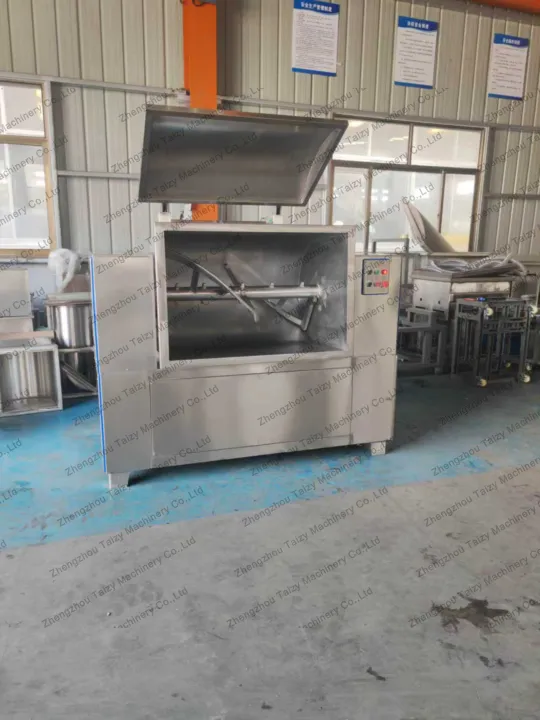
The line begins with our industrial dough mixing machine, which kneads atta (whole wheat flour) or maida (refined wheat flour) with water, salt, and a small amount of oil into a uniform, smooth dough. The mixing time is adjustable to match the flour type and local water absorption — a critical step in panipuri because inconsistent dough leads to thick, heavy shells instead of the thin, crispy texture the snack is known for.
- Capacity: 50–75 kg of flour per batch
- Mixing time: 3–10 minutes per batch
- 304 stainless steel contact surfaces, food-grade
- Standard 380V / 50Hz (customizable to local supply)
The same dough mixing machine is also widely used for chapati, puri, samosa wrappers, and other Indian flatbreads, so it stays productive across multiple product lines.
2. Panipuri Forming Machine (Puffing Machine)
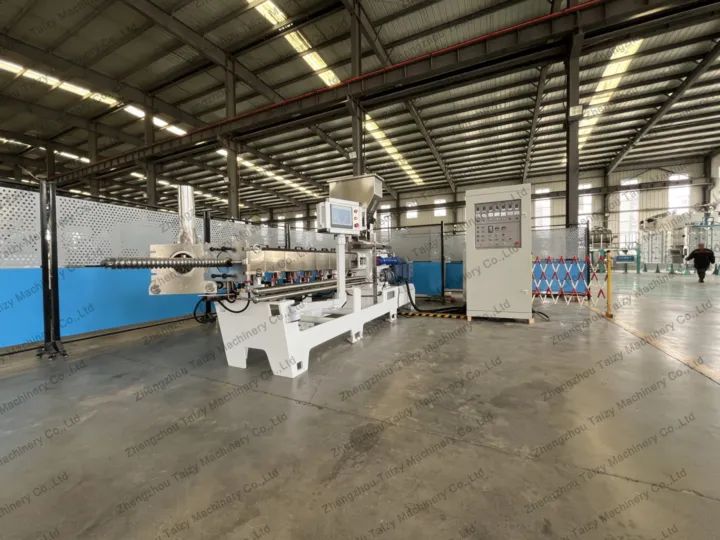
Forming(puffing) is the heart of the panipuri making machine. Instead of traditional sheet-rolling and cutting, this unit operates as a specialized panipuri puffing machine (extruder). Mixed dough or grain flour is fed into the extruder barrel, where high-speed screw friction generates controlled heat and pressure to cook and gelatinize the starch. As the material exits through a custom hollow-shell die, the sudden pressure drop causes it to expand instantly into uniform, round, crispy panipuri shells—eliminating the need for separate sheeting or hollow-pressing steps.
Through precise screw speed and temperature control, the puffing machine maintains consistent expansion ratios and wall thickness across every batch. This prevents uneven puffing, cracking, or dense centers—the most common defects in manual or poorly controlled panipuri production.
By simply swapping out the extrusion dies and adjusting the rotary cutter speed, this puffing machine can also produce a wide variety of hollow or crispy extruded snacks, such as cheese balls, corn curls, bugles, and pellet snacks—giving Indian and international snack manufacturers maximum product versatility from a single machine.
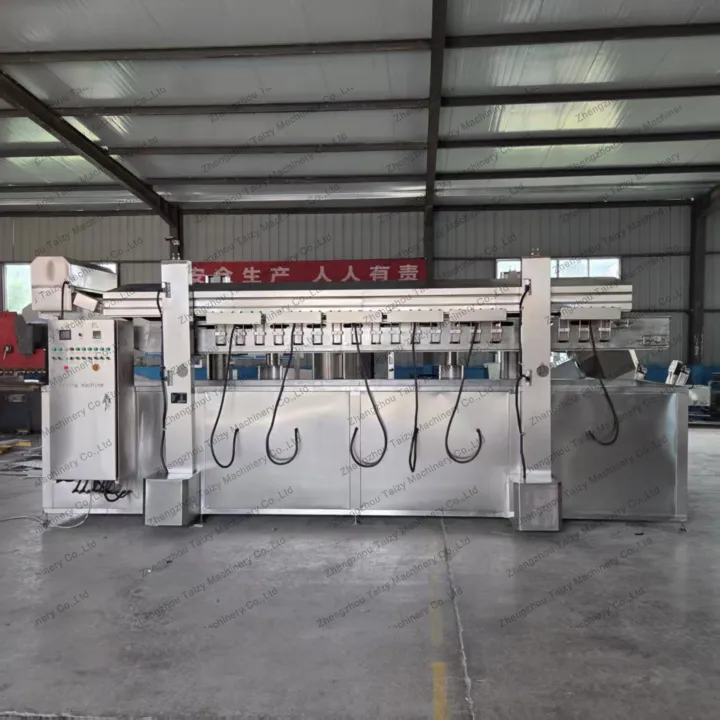
3. Continuous Panipuri Frying Machine
Formed panipuri shells pass through our continuous frying machine, where they are submerged in food-grade oil at precisely controlled temperature and residence time. The result is the signature puff: a thin, crispy outer shell with a hollow pocket inside, ready to be filled with spiced water at the point of sale.
For the Indian market, the fryer can be configured with electric, gas (LPG/PNG), or dual heating. Most Indian customers prefer gas because LPG is widely available and offers fast temperature recovery between batches.
- Continuous mesh-belt conveyor for unattended frying
- Temperature controlled within ±2°C across the full fry zone
- Oil circulation and filtration system to extend oil life
- 304 stainless steel contact parts, food-grade
- Matched capacity to the forming machine (no bottleneck)
4. Vibrating De-oiling Machine
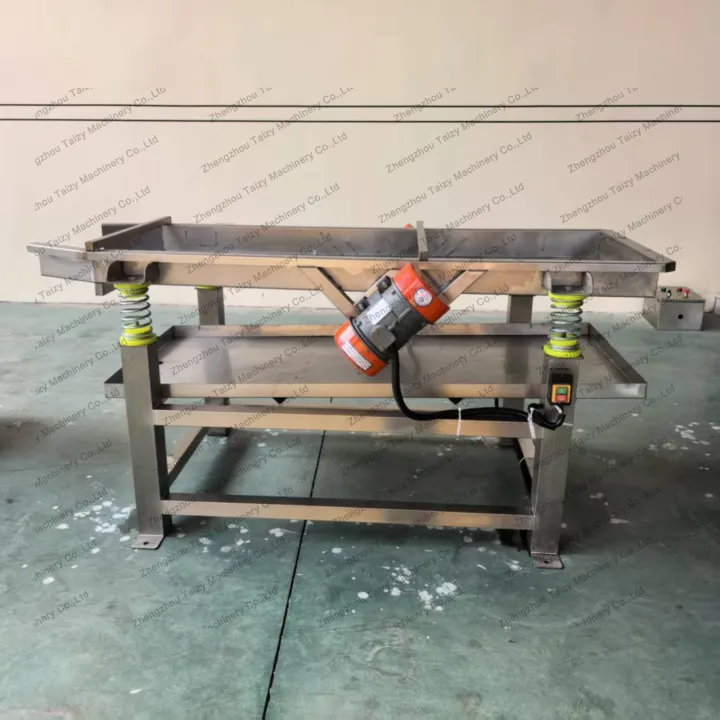
Straight out of the fryer, panipuri shells carry excess surface oil that would otherwise make the finished product greasy, shorten shelf life, and stick together in the package. Our vibrating de-oiling machine uses gentle high-frequency vibration to shake off this surface oil while preserving the shell structure — no cracking, no collapse.
- Variable vibration frequency for different shell sizes
- Sloped discharge for continuous product flow into the drying stage
- Oil collection tray returns excess oil to the fryer reservoir
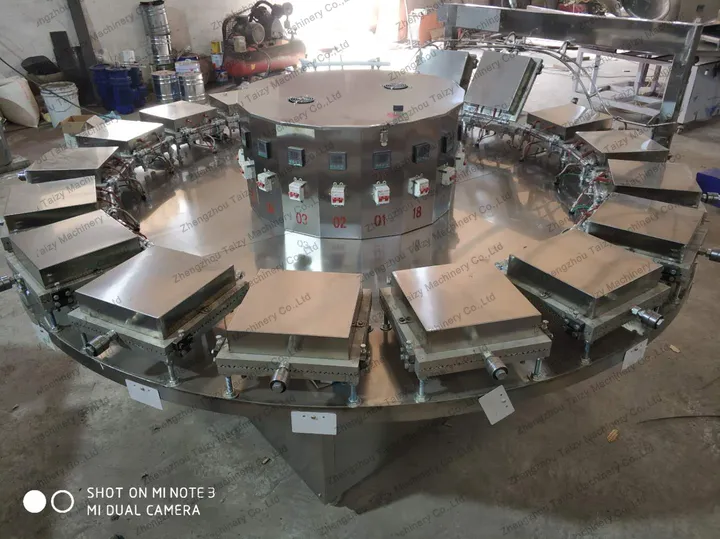
5. Turnover Air Drying Machine
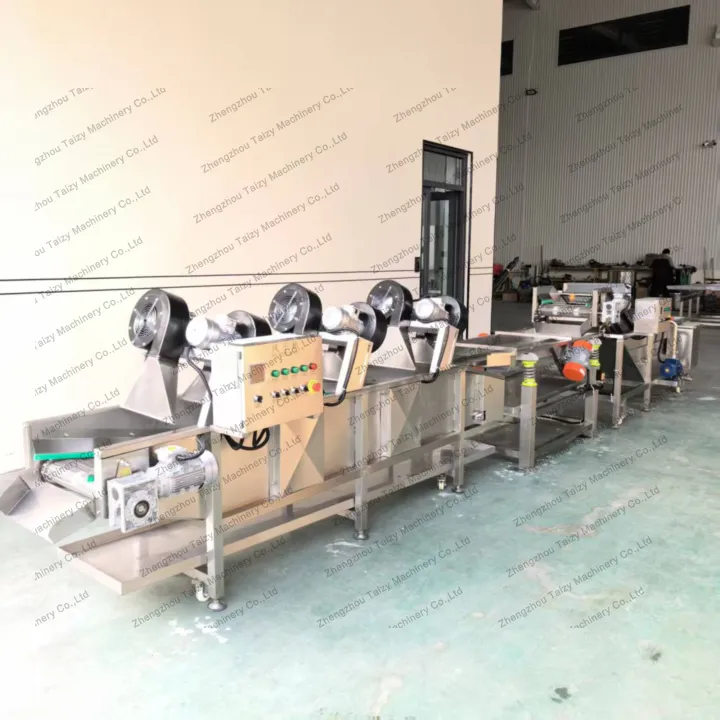
The turnover air drying machine is a key step that distinguishes a premium panipuri from a mass-market one. A multi-layer mesh belt slowly conveys the de-oiled shells through a tunnel of controlled-temperature air, with a turning mechanism that flips each shell partway through the cycle. The result is even moisture removal on both sides, raising crispness and extending shelf life — particularly important if the shells will be packaged, stored, and shipped to retail.
- Multi-layer stainless steel mesh belt
- Auto turning device for even drying on both sides
- Independent temperature control for each zone
- Drives moisture content down to a stable, packagable level
6. Panipuri Packaging Machine
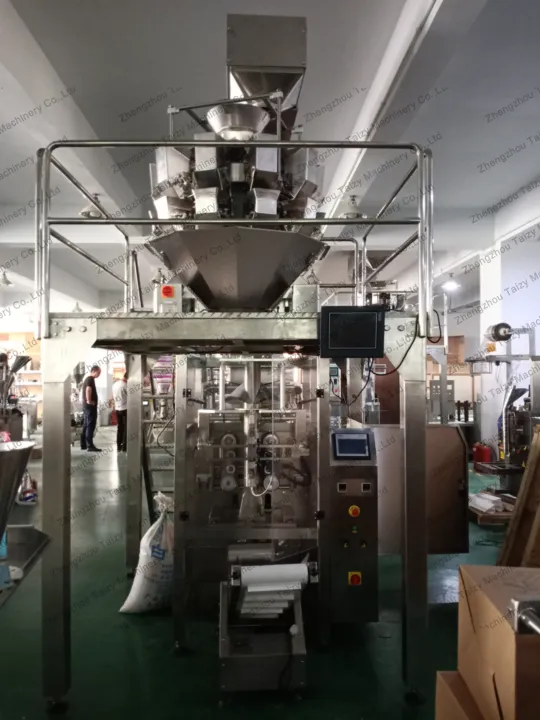
The dried shells reach the final panipuri packing machine, which weighs and bags them into retail pouches — typically 50g, 100g, 200g, or 500g formats for the Indian market. The packaging stage can be configured as:
- Vertical form-fill-seal (VFFS) machine — for pillow pouches and sachets
- Multi-head weigher packaging line — for high-accuracy retail packs
- Counting and packing machine — for fixed-piece packs (e.g., “20 puris per pack”)
- Nitrogen-flushed packaging — optional, extends crispness for longer distribution
For wholesale and HoReCa supply, larger 1–5 kg bags can also be produced on the same line with a simple changeover.
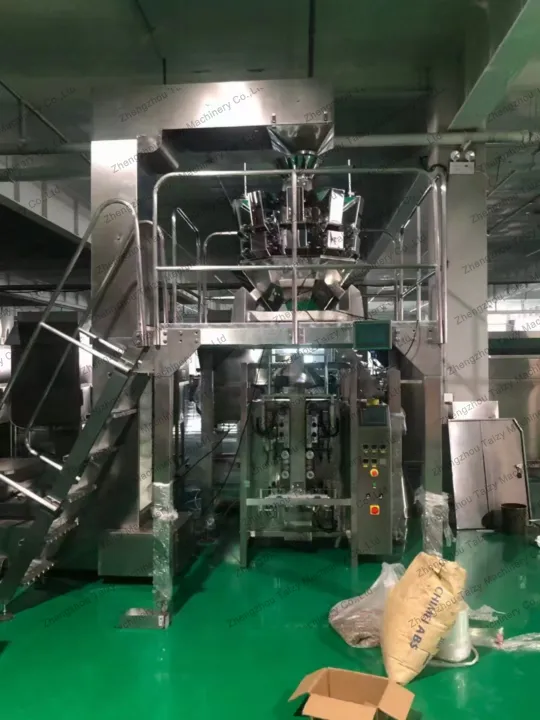
Technical Specifications of Paniouri Making Machine Line
| Parameter | Specification |
|---|---|
| Product Name | Panipuri Making Machine / Panipuri Production Line |
| Line Composition | 6 machines: dough mixer, forming machine, fryer, vibrating de-oiler, air dryer, packaging machine |
| Forming Machine Type | Horizontal skin making machine (4 models available) |
| Forming Models | MZP260, MZP400, MC-Q6302 (560 series), small-capacity unit |
| Capacity Range | 50–800 kg/h (depending on configuration) |
| Sheet Thickness | 0.5–3 mm (large); 1–12 mm customizable (small) |
| Roller Length | Default 45 cm (small); custom lengths on request |
| Machine Material | 304 stainless steel (food contact), carbon steel frame |
| Control System | PLC + HMI touchscreen, VFD frequency control |
| Heating Options | Electric / Gas (LPG/PNG) / Dual |
| Power Supply | 380V / 50Hz / 3-phase (customizable) |
| Automation Level | Fully automatic continuous line |
| Operator Requirement | 1–2 operators per shift (depending on line size) |
| Warranty | 1 year main components, lifetime technical support |
Panipuri Production Line Spec
Why Choose Our Panipuri Making Machine?
- Built for Indian dough. The horizontal forming machine’s polymer-coated press rollers handle the high-moisture atta doughs that Indian panipuri recipes require, without sticking or tearing — a common failure point on machines designed for European dumpling skin.
- Four capacity tiers, one engineering family. From a 60 pcs/min workshop unit to an 800 kg/h industrial line, all four forming machines use the same frequency-controlled, sensor-tensioned roller system. You scale up without retraining your operators.
- Every machine works alone or in line. Each of the six machines can be purchased as a stand-alone unit for an existing factory, and integrated into the line later. Your capital investment is never stranded.
- 304 stainless steel throughout. All food-contact parts are 304 stainless steel, meeting Indian FSSAI and international food hygiene standards. The frame uses heavy-gauge carbon steel for rigidity over years of shift work.
- Gas or electric heating. Most Indian factories prefer LPG/PNG heating for the fryer. We ship the line with your local heating source pre-configured, including burners, regulators, and gas train.
- Engineered for long shifts. Vibration de-oiling, multi-layer air-drying, and automated packaging mean one operator can run the full line, reducing labor costs in a market where skilled chaat cooks are increasingly hard to find and retain.
- Multi-product flexibility. The same forming machine and line can produce wonton skins, dumpling wrappers, shaomai skins, samosa strips, and other sheet-based snacks. Spread your fixed cost across multiple SKUs and seasonal demand.
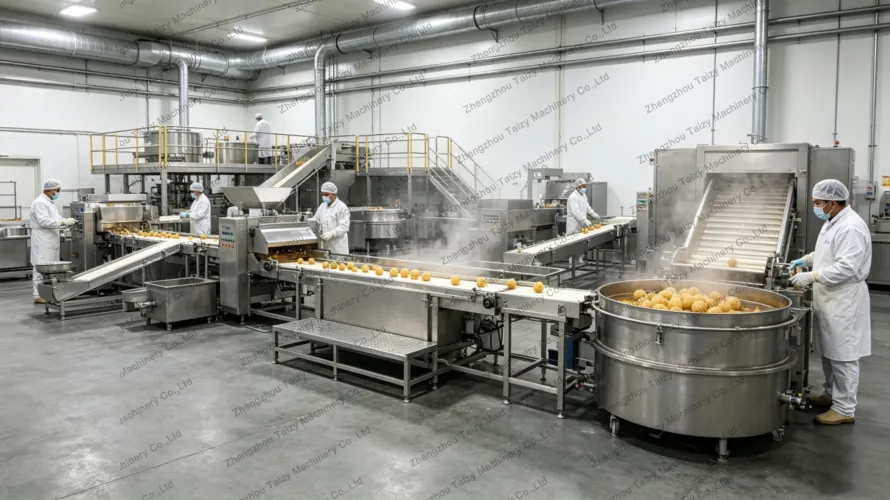
Applications & Markets of Pani p uri Making Machine Line
Our panipuri production line serves the full spectrum of the Indian crispy hollow-shell market, plus diaspora and export markets:
- North India (Delhi NCR, Punjab, Haryana, UP, Rajasthan) — golgappa-centric markets, high-volume roadside stalls, snack brands like Bikaji and Haldiram-style regional players
- East India (West Bengal, Bihar, Jharkhand, Odisha) — puchka / gup chup production, with strong demand for slightly thicker shells
- West & South India (Maharashtra, Gujarat, Karnataka, Tamil Nadu) — panipuri is a pan-Indian street food; modern retail packs are growing fastest here
- Bangladesh, Nepal, Sri Lanka — puchka / pani puri with local flour blends, often for export to the Middle East
- Middle East (UAE, Saudi Arabia, Qatar) — Indian diaspora market, plus local consumption by South Asian workers
- East Africa (Kenya, Tanzania, Uganda) — Indian community and adopted local street food (especially in Nairobi and Dar es Salaam)
- West Africa (Nigeria, Ghana) — emerging market where pani puri is being introduced alongside existing snack lines
- UK, USA, Canada, Australia — diaspora retail packs sold in Indian grocery chains
The same line can be adapted to produce sooji ki puri, atta biscuits, and other Indian bakery-style snacks with a change of mold and recipe — giving you a year-round product portfolio from a single capital investment.
FAQ of Panipuri Prodution Line
What is the difference between panipuri, pani puri, and golgappa?
They are the same snack — a round, hollow, crispy fried wheat shell filled with spiced water.
Panipuri and pani puri are the standard Hindi names used across most of India; golgappa is the preferred term in Punjab, Delhi NCR, Haryana, and UP; puchka is the Bengali term used in West Bengal, Bihar, and East India.
Our pani puri making machine produces the same shell that all three names refer to.
What is the price of a panipuri making machine?
Panipuri making machine price depends on the line configuration and capacity.
A small-capacity workshop unit (60 pcs/min) costs a fraction of a full industrial line; a complete six-machine line with MZP400 forming and 200-400 kg/h capacity is a mid-range investment; a full MC-Q6302 industrial line for 400-800 kg/h is a turnkey capital project.
Contact us with your target capacity, location, and heating preference for a detailed quotation including shipping to your Indian port.
Which capacity forming machine should I choose?
Choose the small-capacity unit (60 pcs/min, 2.2 kW, 200 kg) for home businesses, pilot production, or single-shop supply.
Choose the MZP series for targeted distribution (100-800kg/h).
Can the line use gas (LPG) heating for the fryer?
Yes. The continuous pani puri frying machine can be configured with electric, LPG/PNG gas, or dual heating. Most Indian customers prefer gas because LPG is widely available, recovers temperature quickly between batches, and gives the traditional fried flavor profile Indian consumers expect. We ship the gas train (burners, regulators, safety valves) pre-assembled and tested.
What raw material do I need to make pani puri?
The standard recipe uses atta (whole wheat flour) or maida (refined wheat flour), water, salt, and a small amount of oil. Some regional recipes add sooji (semolina) for extra crispness, or a small percentage of baking soda for a more even puff.
Is the panipuri production line 304 stainless steel?
Yes. All food-contact parts across the six machines — dough mixer, forming rollers, fryer tank, de-oiler mesh, drying tunnel, and packaging conveyor — are 304 stainless steel, meeting Indian FSSAI and international food-grade requirements. The structural frames use heavy-gauge carbon steel coated for corrosion resistance.
How many operators does the line need?
A small line (small-capacity forming + 50-100 kg/h) can be run by one operator. A full industrial line (MC-Q6302 + 400-800 kg/h) typically needs 2-3 operators per shift.
Can I also use the forming machine for wonton or dumpling skins?
Yes. The horizontal skin making machine is designed as a multi-purpose sheet former — it produces dumpling skin, wonton skin, shaomai skin, steamed dumpling skin, and any dough made with boiling water. The thickness is adjustable from 0.5-3 mm (large models) or 1-12 mm (small unit), and molds can be swapped for different product formats. This makes the line a versatile asset across multiple Indian and Chinese snack categories.
Contact Us for a Quotation
Tell us your target capacity, factory location in India, and preferred heating source — we will respond with a complete panipuri making machine price quotation, factory layout drawing, and shipping plan to your nearest Indian port (Nhava Sheva, Mundra, Chennai, or Kolkata).
WhatsApp: +86 13673689272
Email: info@pastrymachinery.com
Website: pastrymachinery.com
Related Products
Customers looking at our panipuri making machine often compare it with the following equipment and complete lines:
- Chin Chin Production Line — West African fried snack line with similar dough-fry-deoil-package structure
- Spicy Strip Production Line — Chinese-style fried snack line for spicy strips-style extruded or formed snacks
- Spring Roll Production Line — sheet-based wrapper and roll production, using similar horizontal skin making technology
- Multi-function Commercial Dough Mixer — the upstream dough mixing machine in this line, also used for chapati, samosa, and puri doughs